
Innovation Projects
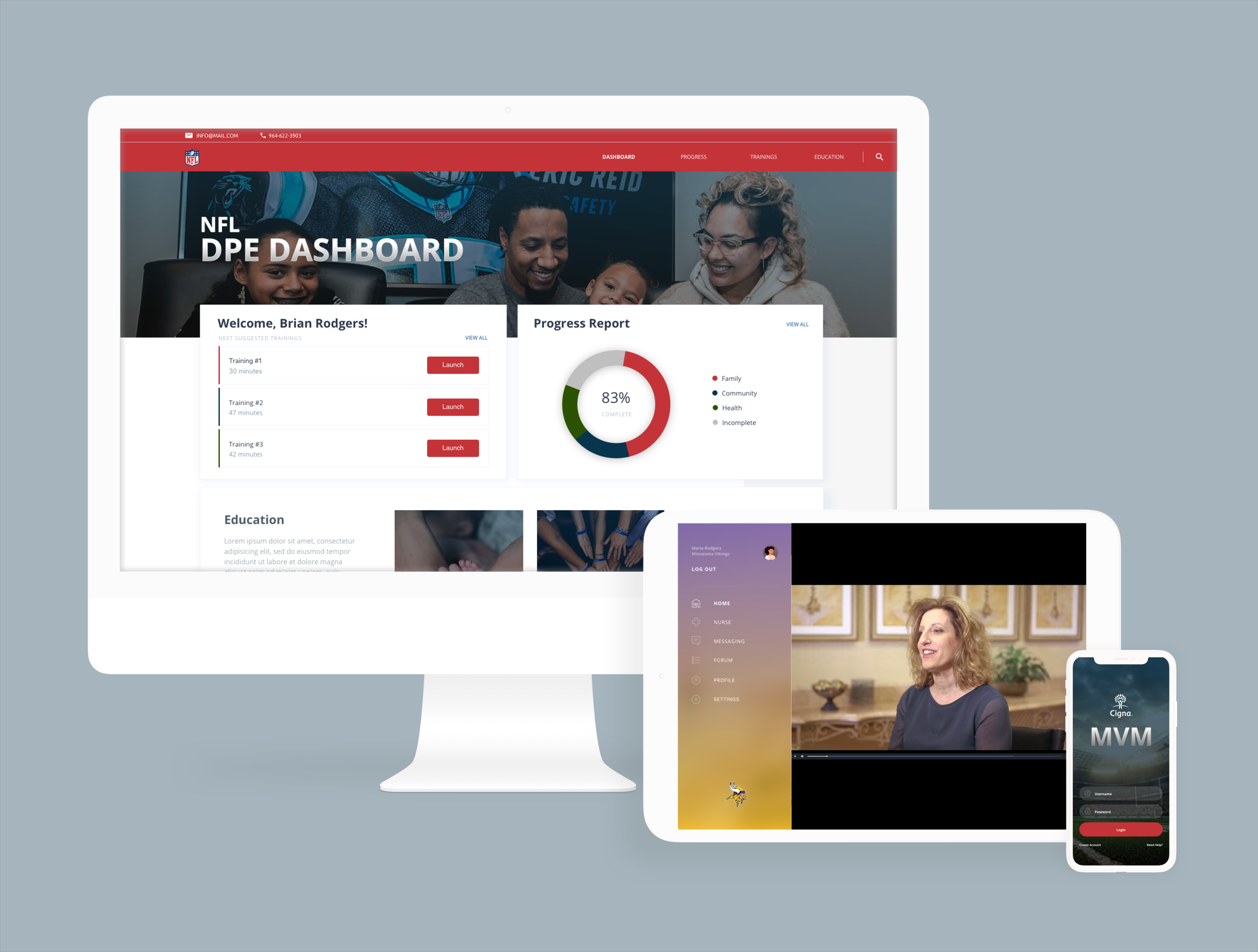
NFL Client Innovations
Problem
Our client's employees frequently travel across the country, often being separated from their families for extended periods of time. We need to explore ways to use technology or other means to connect these family members, given the challenges of long-distance communication.
My Role
This project was a collaborative effort to identify potential offerings, both technical and non-technical, to present to a client in order to retain their business. I was brought onto the team to provide additional support and perspective, as the project was for a different team within the company. Working with three other Project Managers in the innovation sector, we met twice weekly to brainstorm and divide tasks to efficiently research potential solutions.
Proposed Solutions
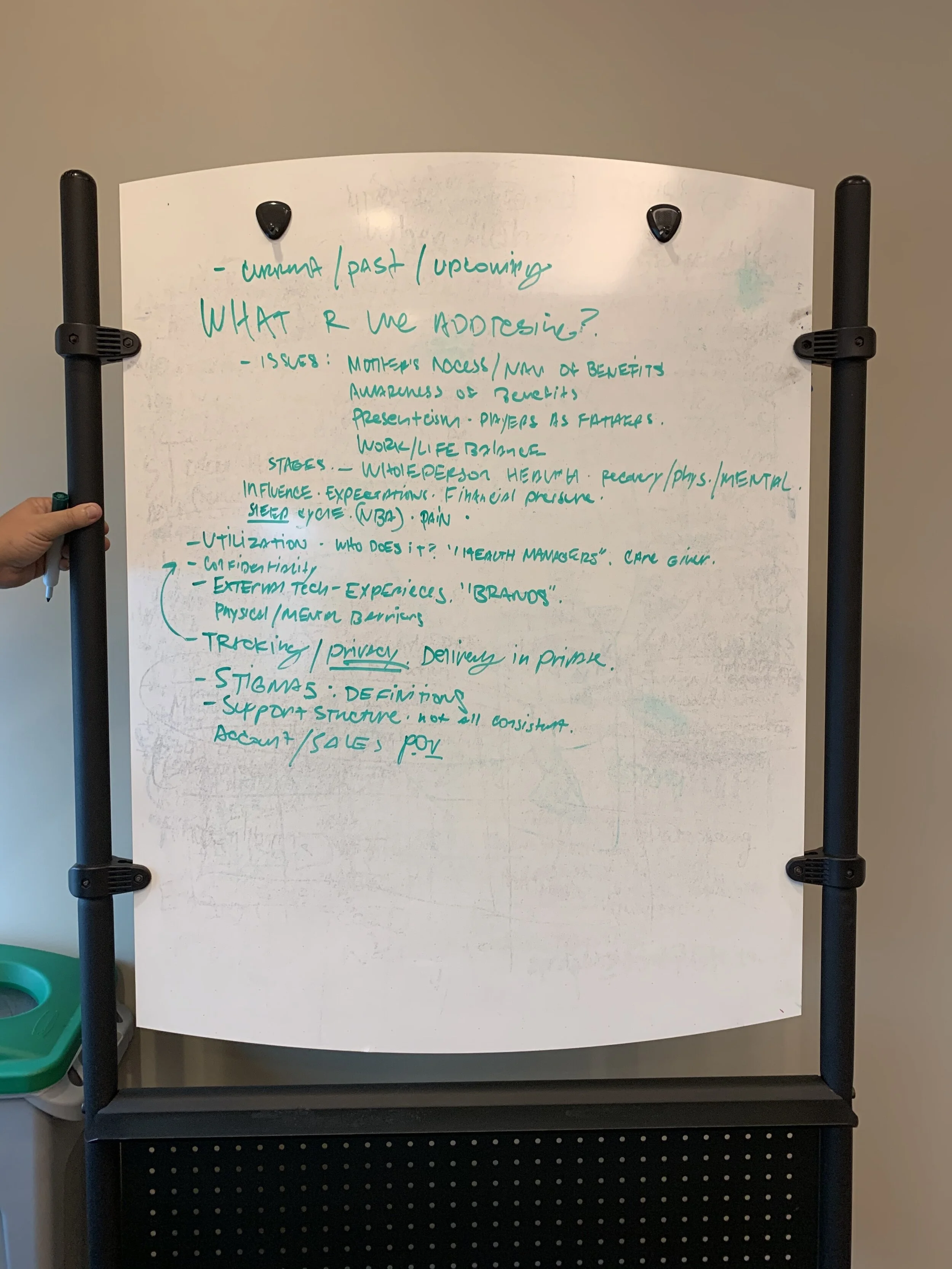
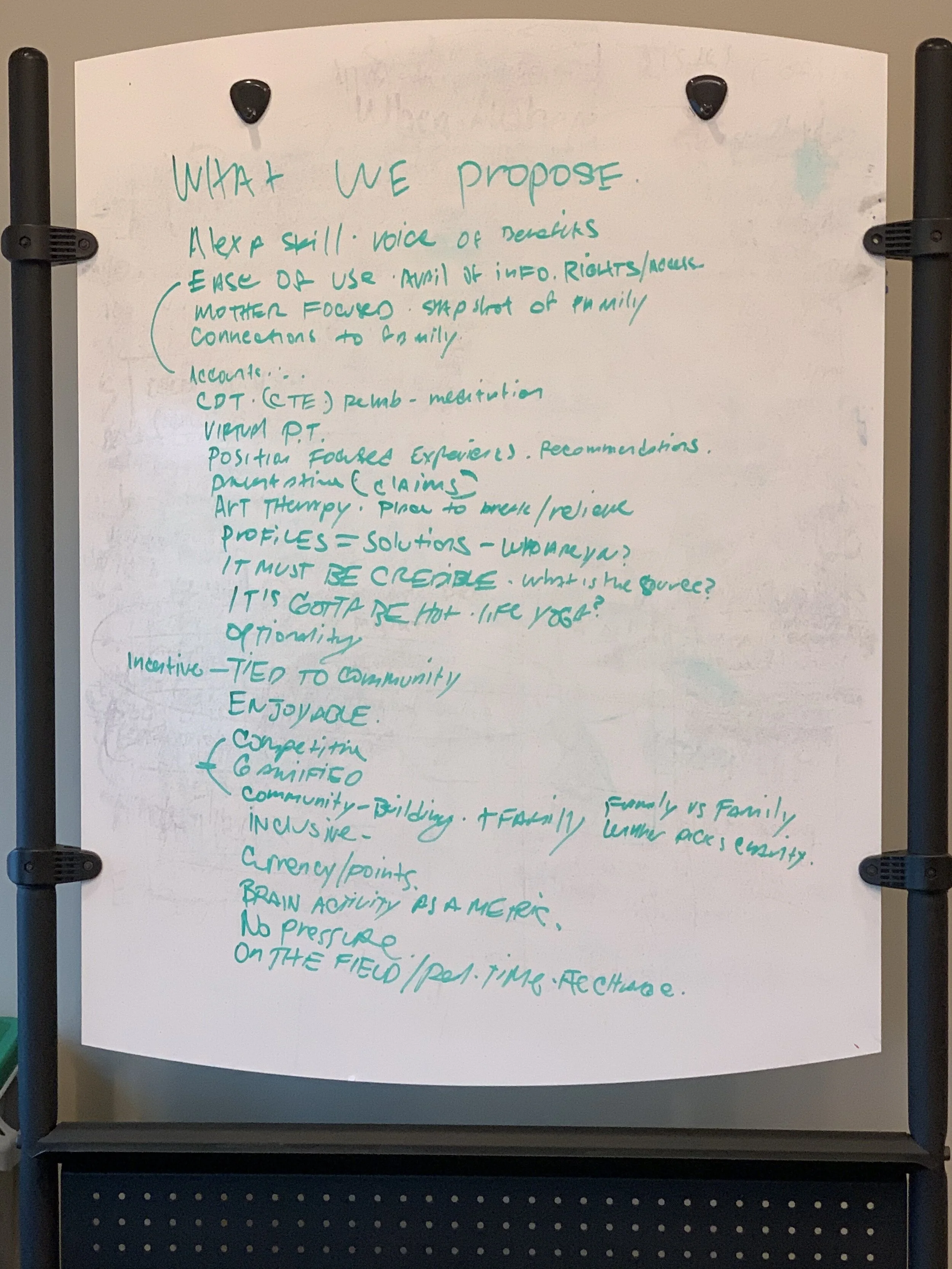
Our team identified six ideas to pitch:
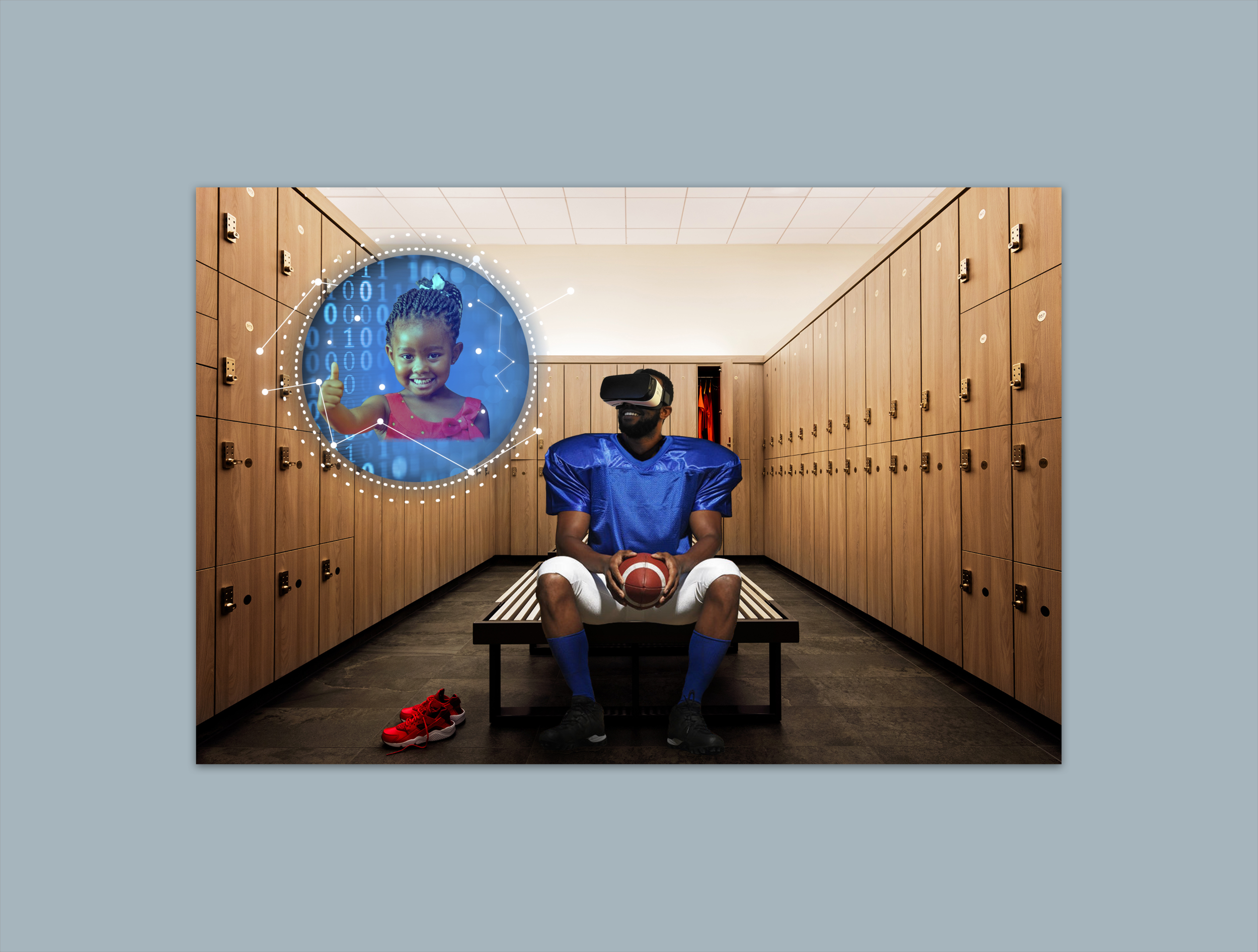
Virtual reality family "hangouts"
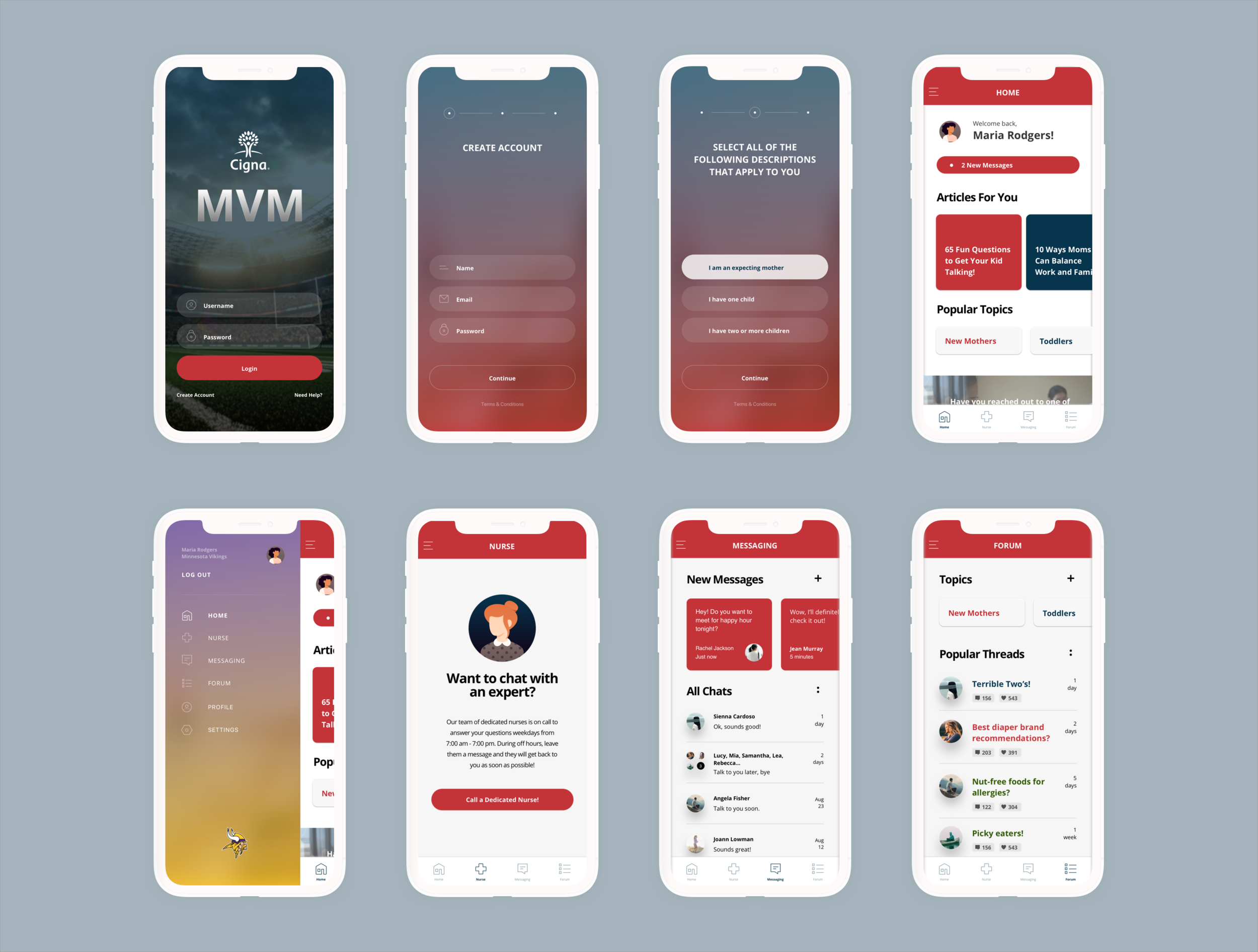
A maternal support application
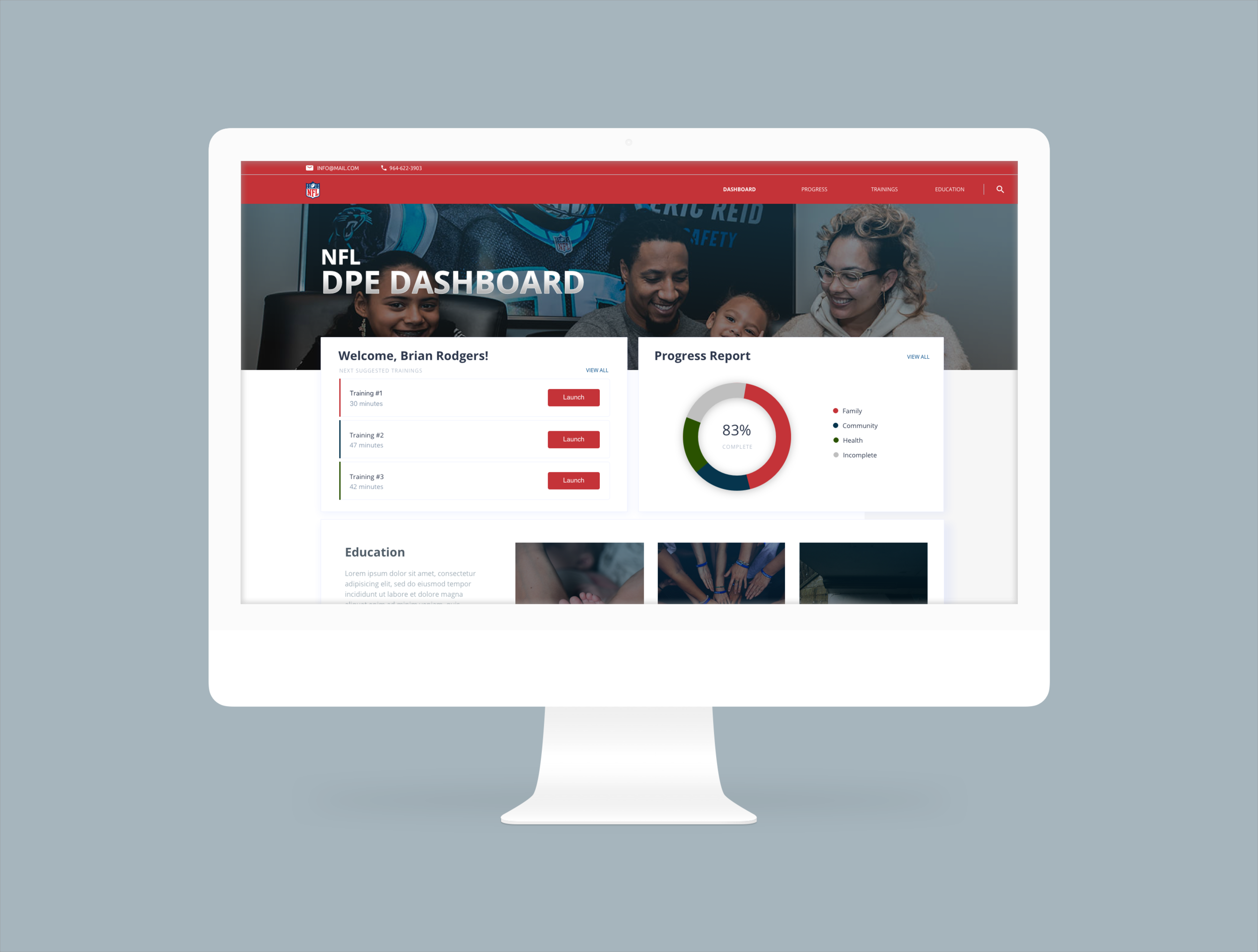
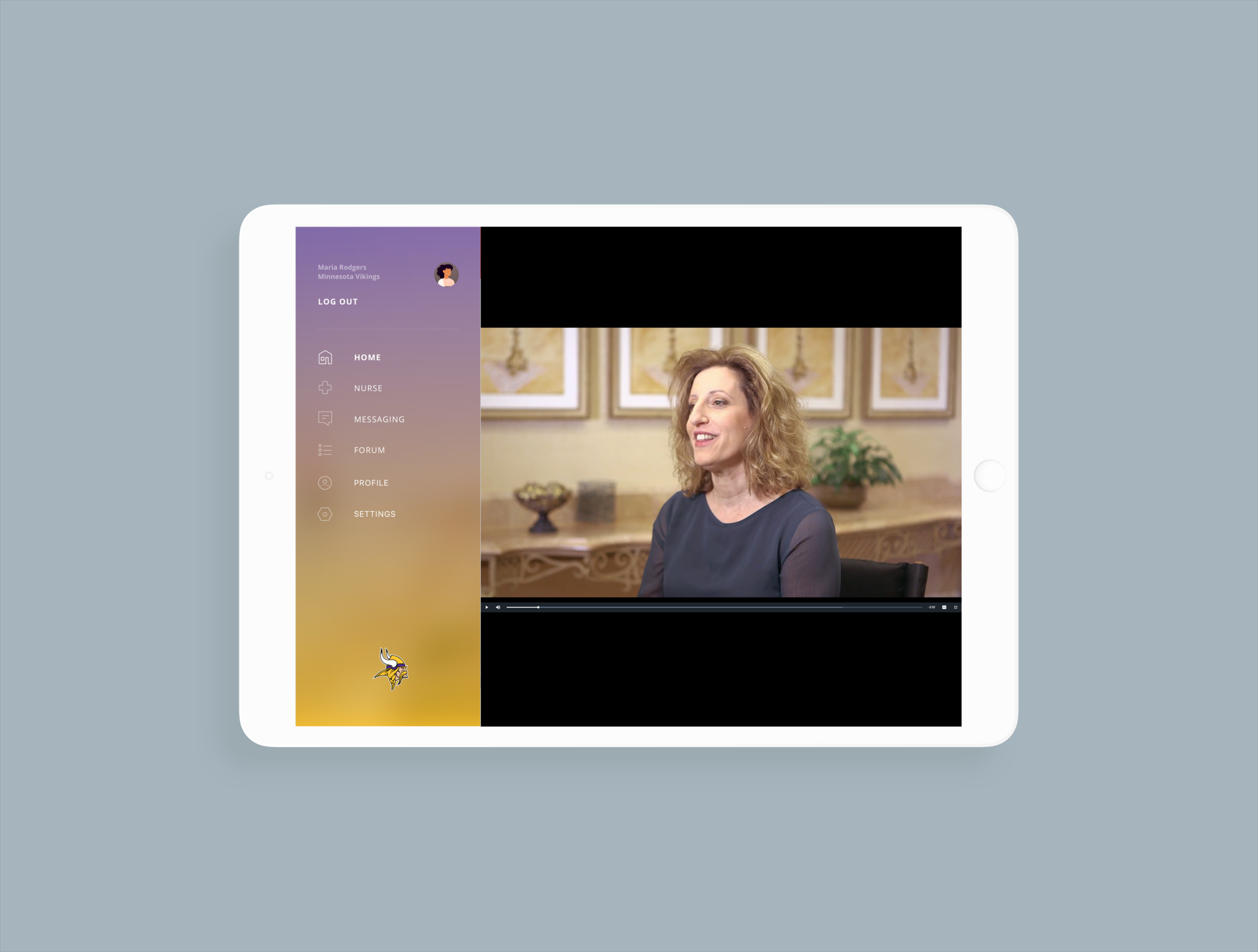
An educational dashboard
A luxury maternity event
A rewards card for participating in wellness activities
A community center for youth
All of these ideas focused on fostering community and family interaction, addressing different aspects of social connections between families and communities.
Challenges
I focused on creating visual pitch mockups for the first three technology-based ideas, which presented a few challenges. After our initial brainstorming sessions, we received a list of prohibited topics from the client, which eliminated many of our ideas. Additionally, we had not fully fleshed out the features for these ideas, so creating a mockup that conveyed the concept of "virtual reality" required multiple iterations to find an appropriate visual. As this was a pitch deck, I prioritized creating a tangible and realistic representation of the UI rather than investing time in the UX flow.
Final Result
I created visually appealing mockups for all three concepts that I was satisfied with, which were then incorporated into the final pitch deck by one of the Project Managers. The goal of enabling the business team to understand the concepts enough to move forward was achieved, and the project progressed with a vendor under the supervision of the business team. This project was a valuable learning experience in terms of working with ambiguity, time constraints, and collaborating with different strategic priorities within leadership. As this team primarily worked with external groups, there was a focus on creating a polished and impressive presentation to secure buy-in rather than emphasizing detailed planning. Overall, the project was considered a success as the main team moved forward with the project and engaged a vendor to complete the operation.
AR Roadmap
Augmented Reality (AR) is a technology that allows digital 3D models to be overlaid onto the real world, creating a blend of virtual and physical objects. Examples of AR include Snapchat filters and the Pokémon Go app. AR allows for the incorporation of various types of media, such as videos, photos, audio files, and website links, onto printed materials. By using a phone or tablet to scan physical objects in the real world, such as posters or placemats, users can bring them to life on their device screens.
Problem
Our team was tasked with developing an innovative solution to effectively communicate important information to our clients' increasingly paperless audience. The objective was to create a dynamic and engaging approach to disseminate this information. The specific requirements and parameters of the project were left open-ended, allowing us to explore a range of creative options.
My Role
As the lead designer on this project, I worked closely with our AR developer and the sales marketing team to conceptualize and create a solution for disseminating important information in an engaging way. Our goal was to develop a way to effectively communicate information to clients in a paperless environment. We collaborated throughout the development process to ensure the success of the project.
Proposed Solution
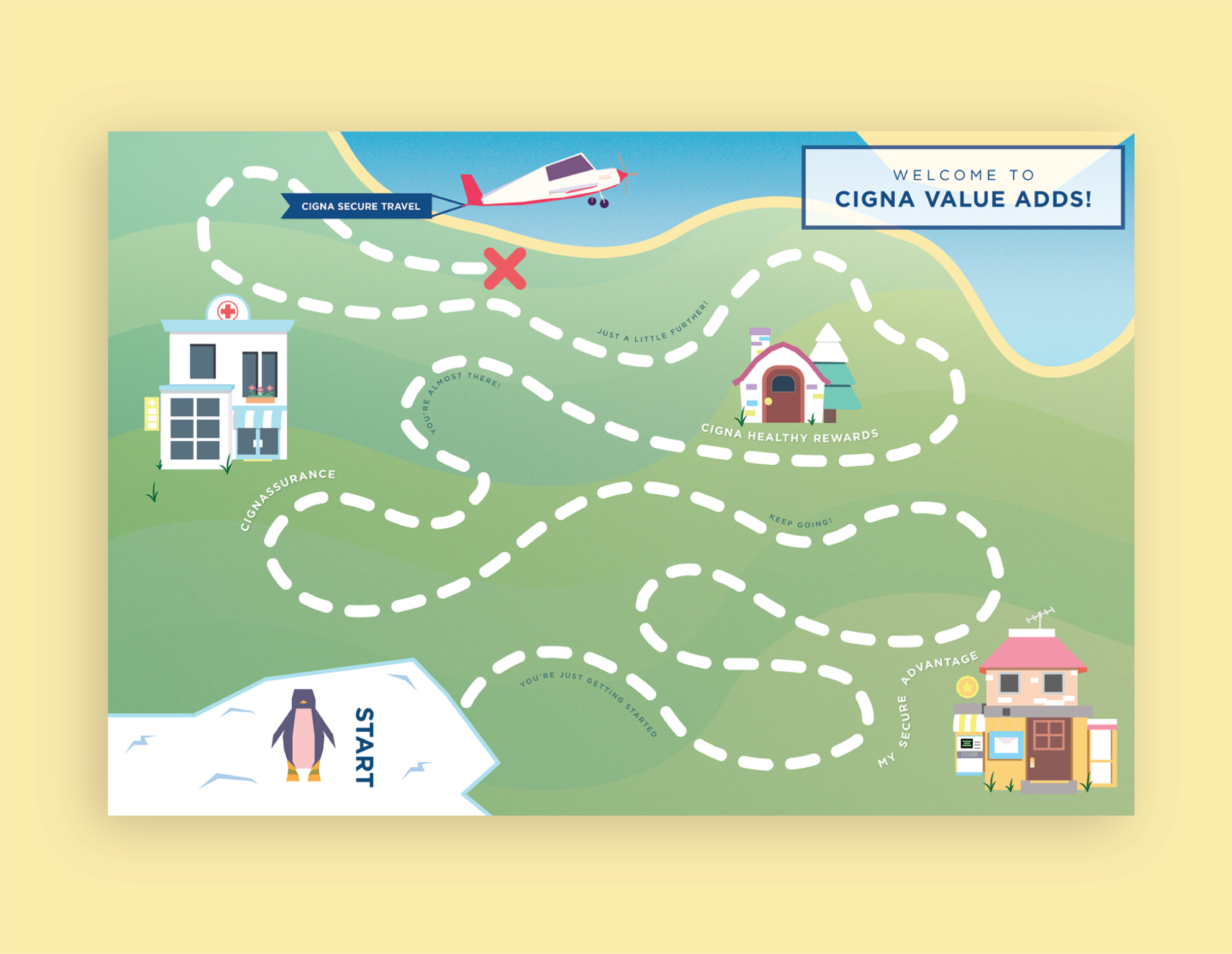
To enhance the user experience, we proposed an interactive "map-style" augmented reality (AR) experience. This would allow users to explore and learn about the topic at their own pace. By leveraging AR technology, we aimed to create an engaging and interactive way for users to access important information.
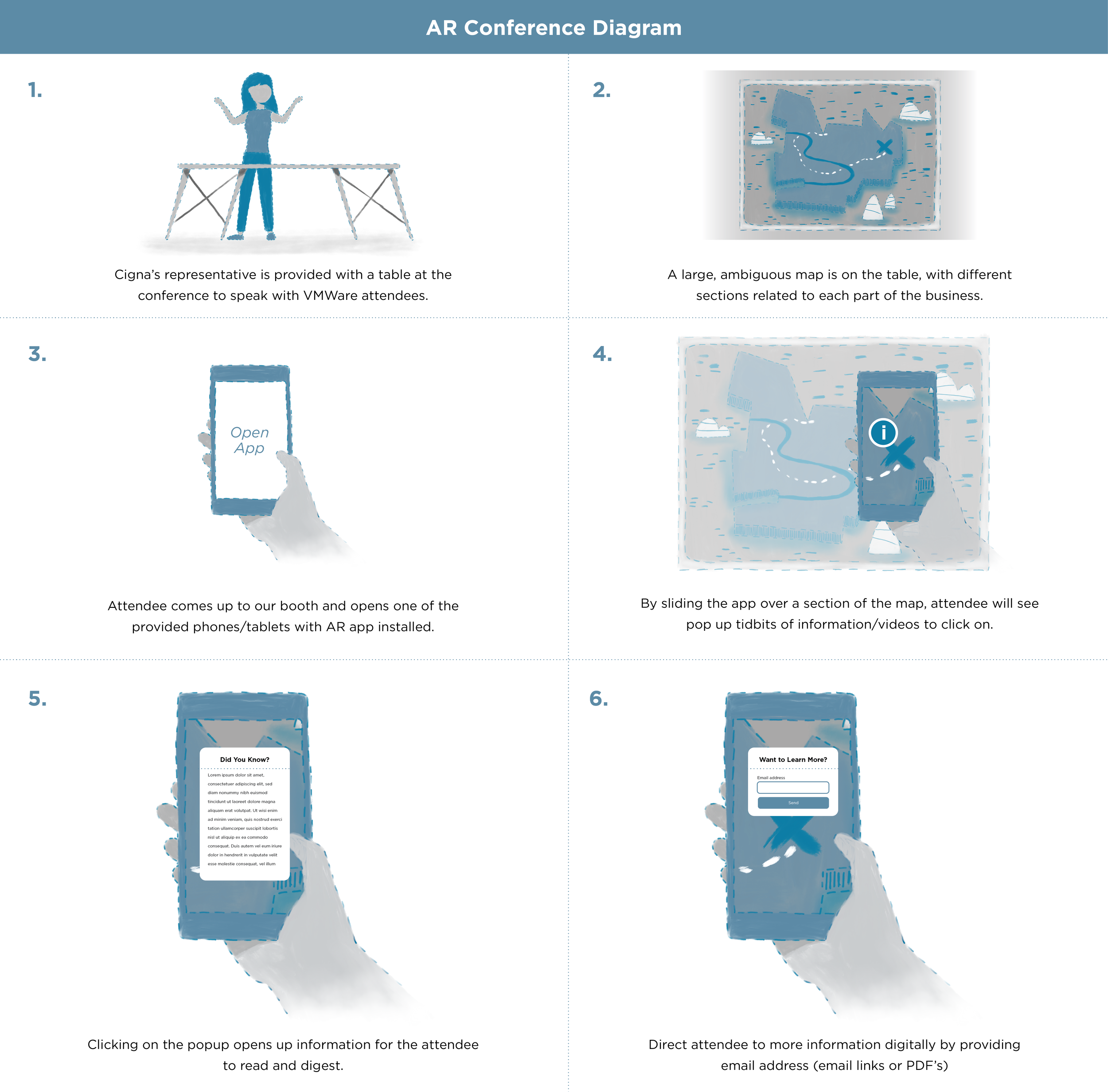
WALKTHROUGH VISUAL OF THE INITIAL CONCEPT FOR OUR SALES PARTNERSAfter receiving approval on the concept from our partners, we began incorporating the most important information from the sales materials into a map-style augmented reality experience. Our goal was to create an interactive and engaging way for users to access this information, while also providing them with the opportunity to access further resources through QR codes at the end of the experience. I worked with our AR developer to create and design the map in Unity, including providing assets and creating a voice-over for each stop on the map. The resulting application was intended to provide users with a unique and interactive way to access and understand the important information provided by our client.
Challenges
There were several challenges that we had to overcome in the course of developing this project. Initially, we had planned to email clients with PDFs to read, but this proved to be difficult to incorporate into the design. As a result, we decided to use QR codes that would allow clients to access the materials on their own devices. Additionally, our partners had a limited budget and could only purchase one iPad for use at conferences around the country. This required careful planning and coordination to ensure that the device was shipped to the correct location and that the conference teams had clear instructions for its use. Finally, we conducted extensive testing to ensure that the overall experience was smooth and user-friendly.
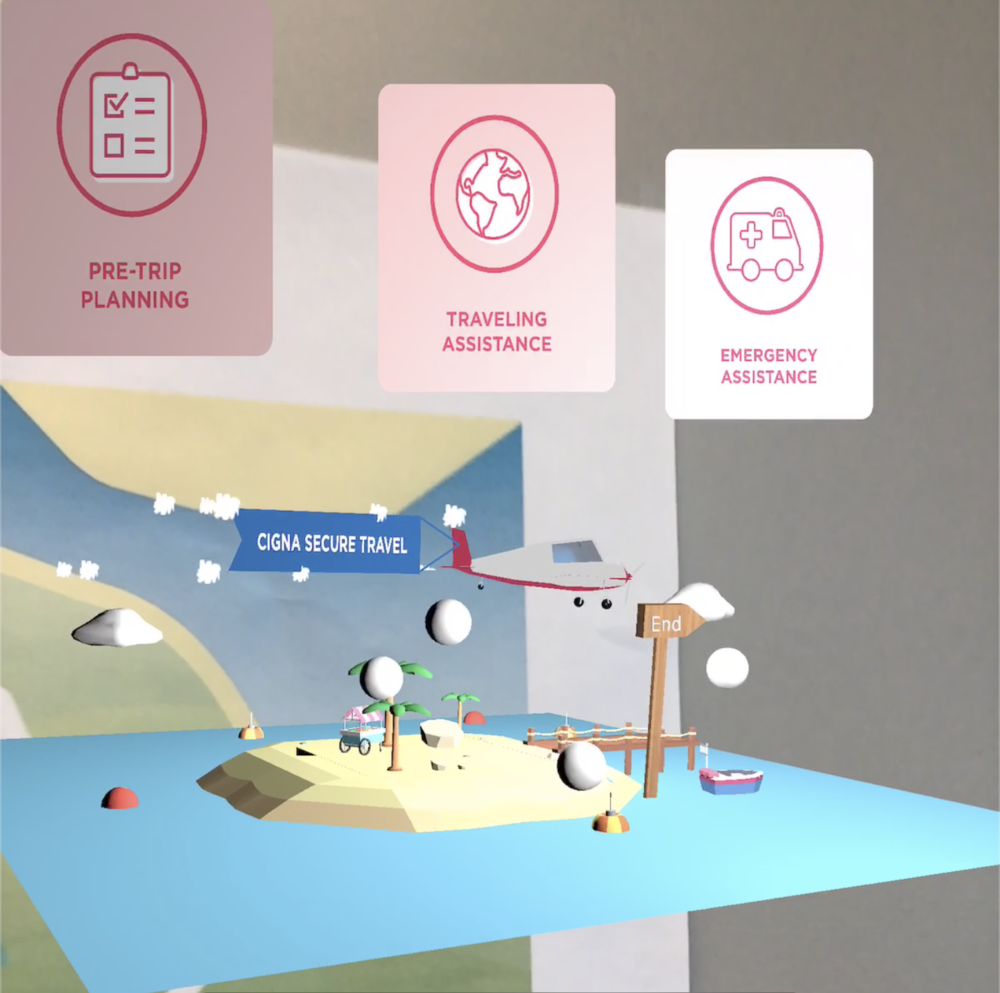
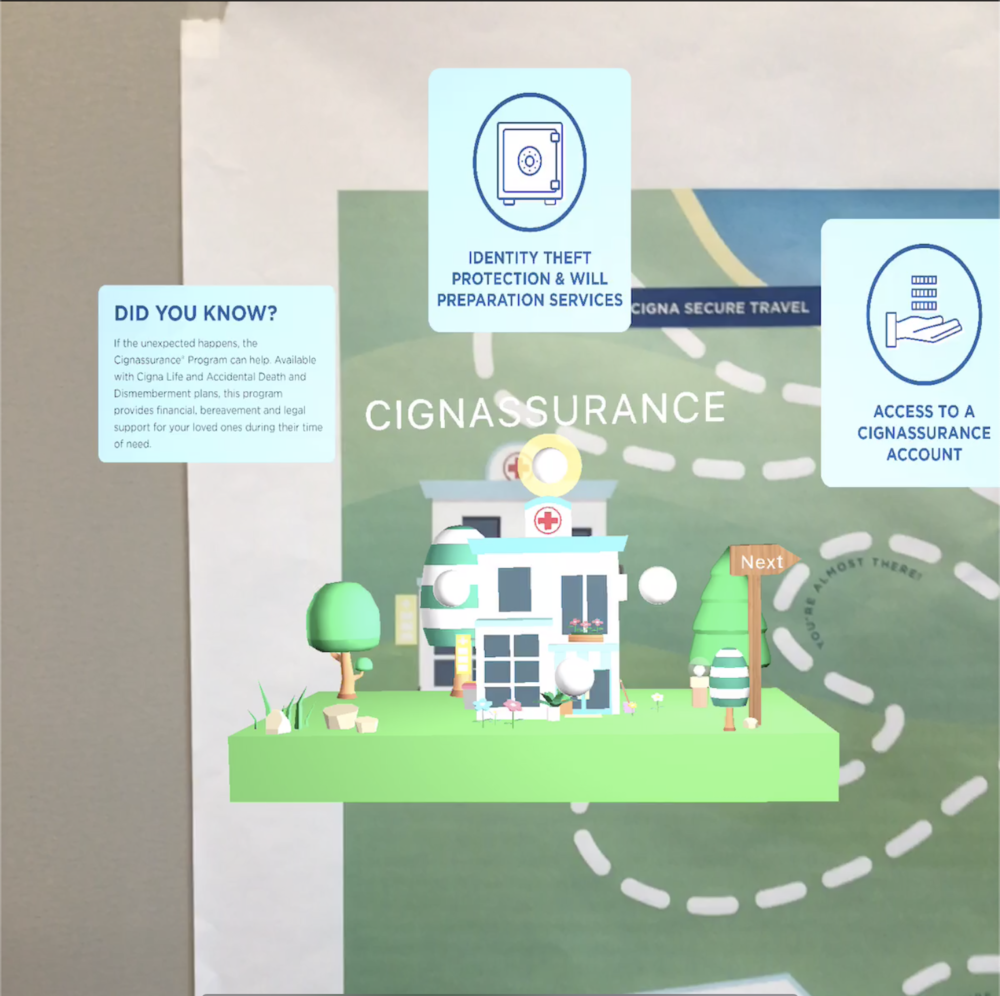
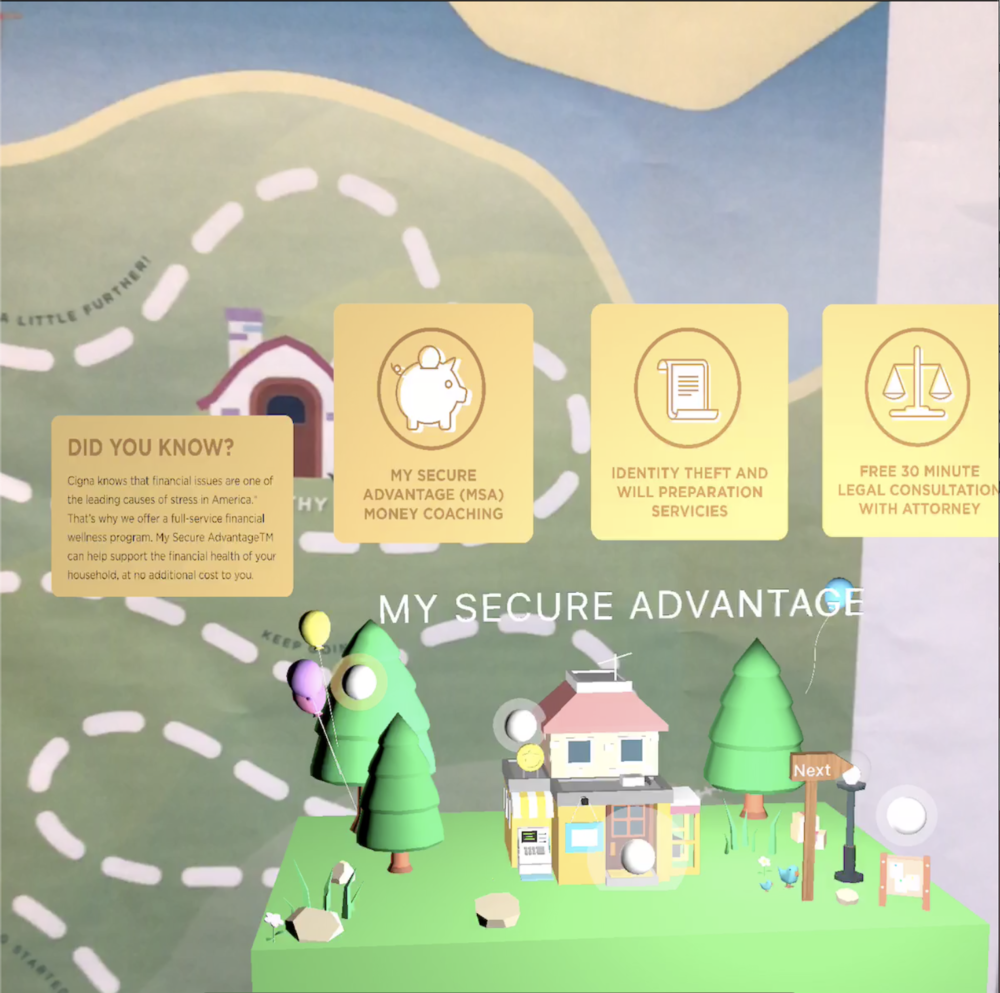
VISUALS OF THE AUGMENTED REALITY APPLICATION IN ACTION. UNABLE TO HOST VIDEO DUE TO NDA. Final Result
The project resulted in the creation of an augmented reality (AR) application that successfully engaged clients with important information. As the lead designer, I worked closely with the AR developer and the sales marketing team to develop a "map-style" AR experience, complete with voiceovers at each stop on the map. The application was well-received at its debut at over ten conferences across the United States. However, further development was paused when the division was sold to another company. This project represented a significant achievement in our team's work with AR and set the stage for future, complex projects in the field.