Cigna Global Wellness Challenge: Scaling a Fitness Platform from Internal Tool to Global Product
Scaling a fitness platform from internal tool to globally licensed product — and redesigning it for the humans using it
Organization: Cigna
My Role: Lead UX Designer — discovery, wireframing, prototyping, stakeholder communication
Scale: 1,000+ challenges projected globally in 2021, up from 128 in 2020
Background
The Cigna Global Wellness Challenge (GWC) started as a response to a real gap: clients, customers, and Cigna's own Healthy Life Center wanted a physical activity challenge platform, and nothing on the market met Cigna's requirements. So Cigna built one.
What began as an internal tool grew into something much larger — a platform licensed to Cigna clients around the world, running hundreds of simultaneous challenges across organizations of all sizes. By 2021, the team was projecting over 1,000 challenges on the platform, nearly an 8x increase over the previous year.
I joined the project as a contributing designer in 2016, and became lead designer in November 2018.
The Problem
Growth exposed a structural bottleneck. With demand scaling rapidly, a team of 8–10 developers was fielding a growing queue of manual spin-up requests every time a client wanted to launch a challenge. It wasn't sustainable.
The answer was a self-service model: give HR representatives the ability to customize and launch challenges themselves, without developer involvement. This was the team's primary initiative — and once it was underway, we turned our attention to a problem that had been accumulating alongside the platform's growth: the user-facing experience hadn't kept pace with the product.
Discovery & Design Process
We dedicated a full day to structured brainstorming with the broader team — developers, product, and business stakeholders — to surface ideas and align on direction before any design work began. I took that raw material and translated it into wireframes, using them to pressure-test concepts and facilitate feedback before committing to higher-fidelity work.
From there, I led the design of a visual and structural overhaul of the user portal, addressing several compounding experience problems:
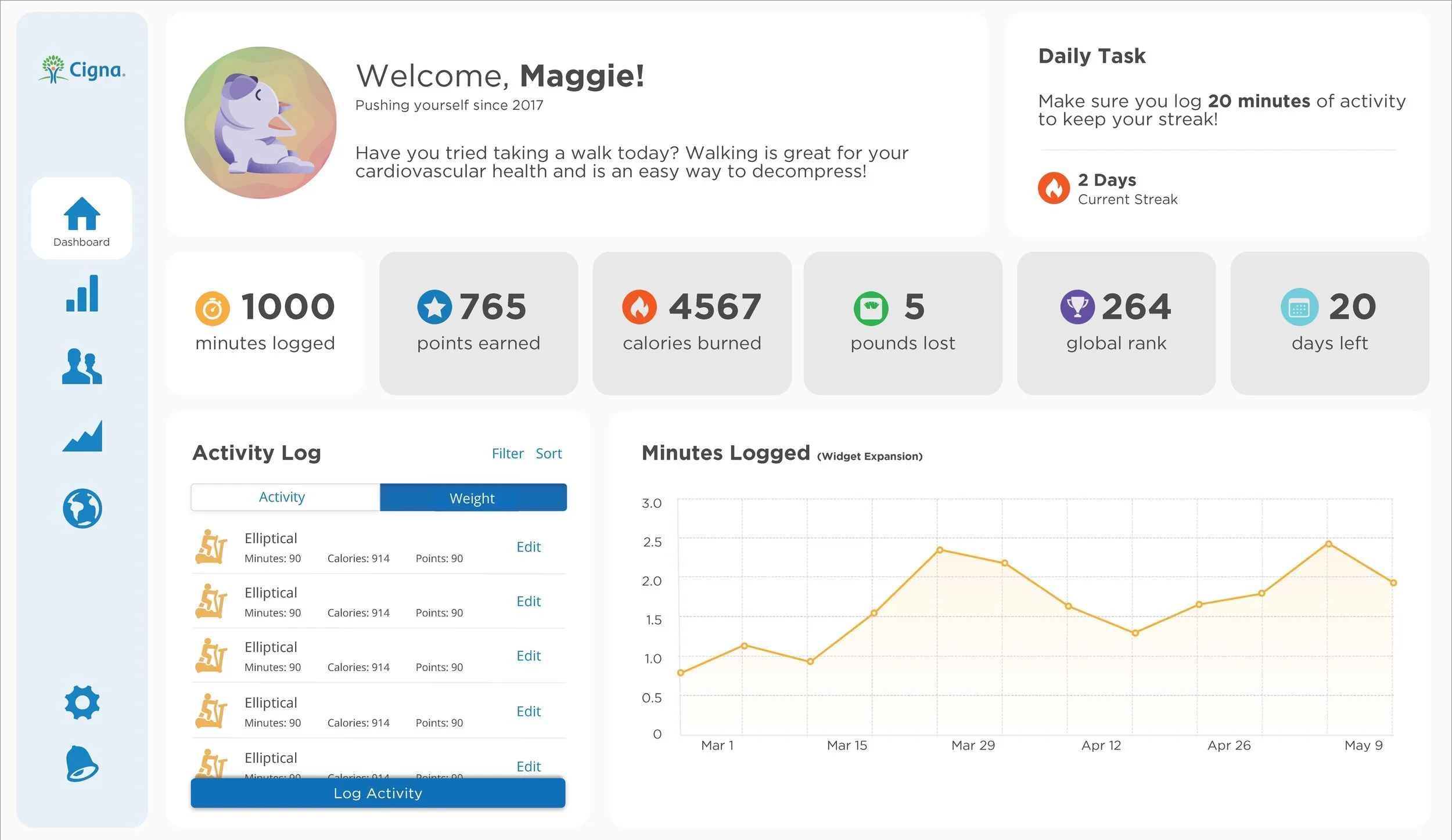
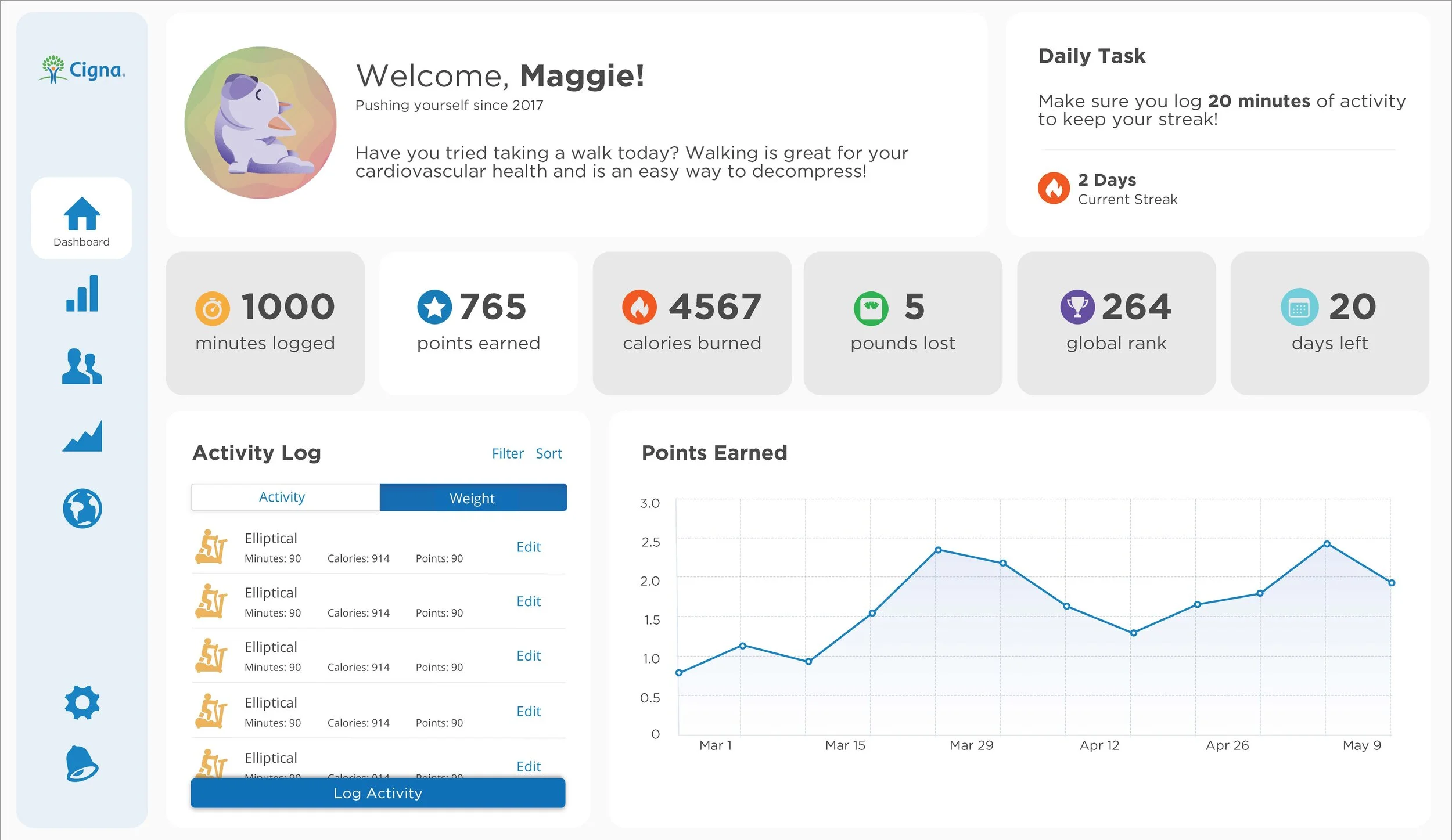
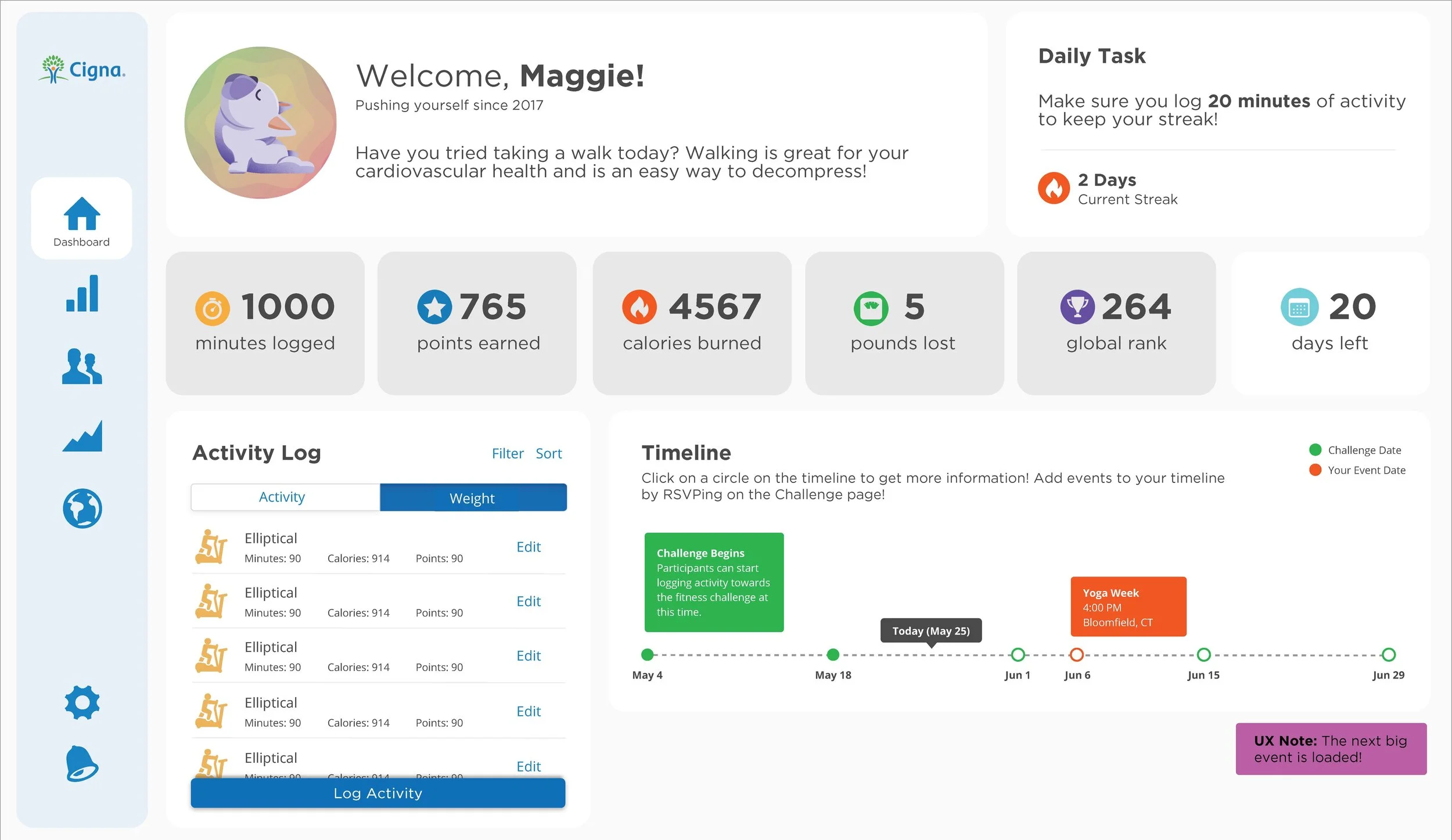
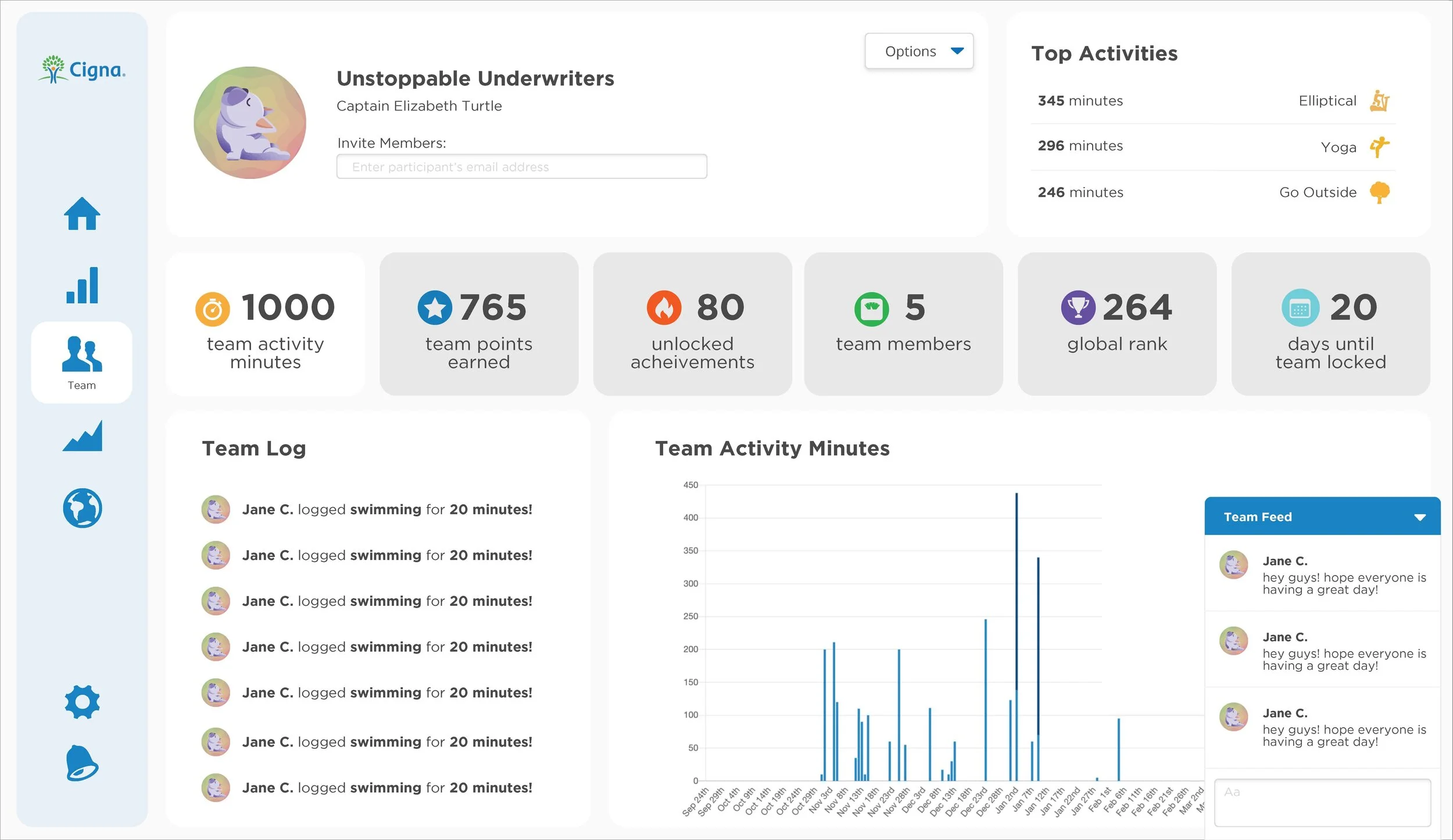
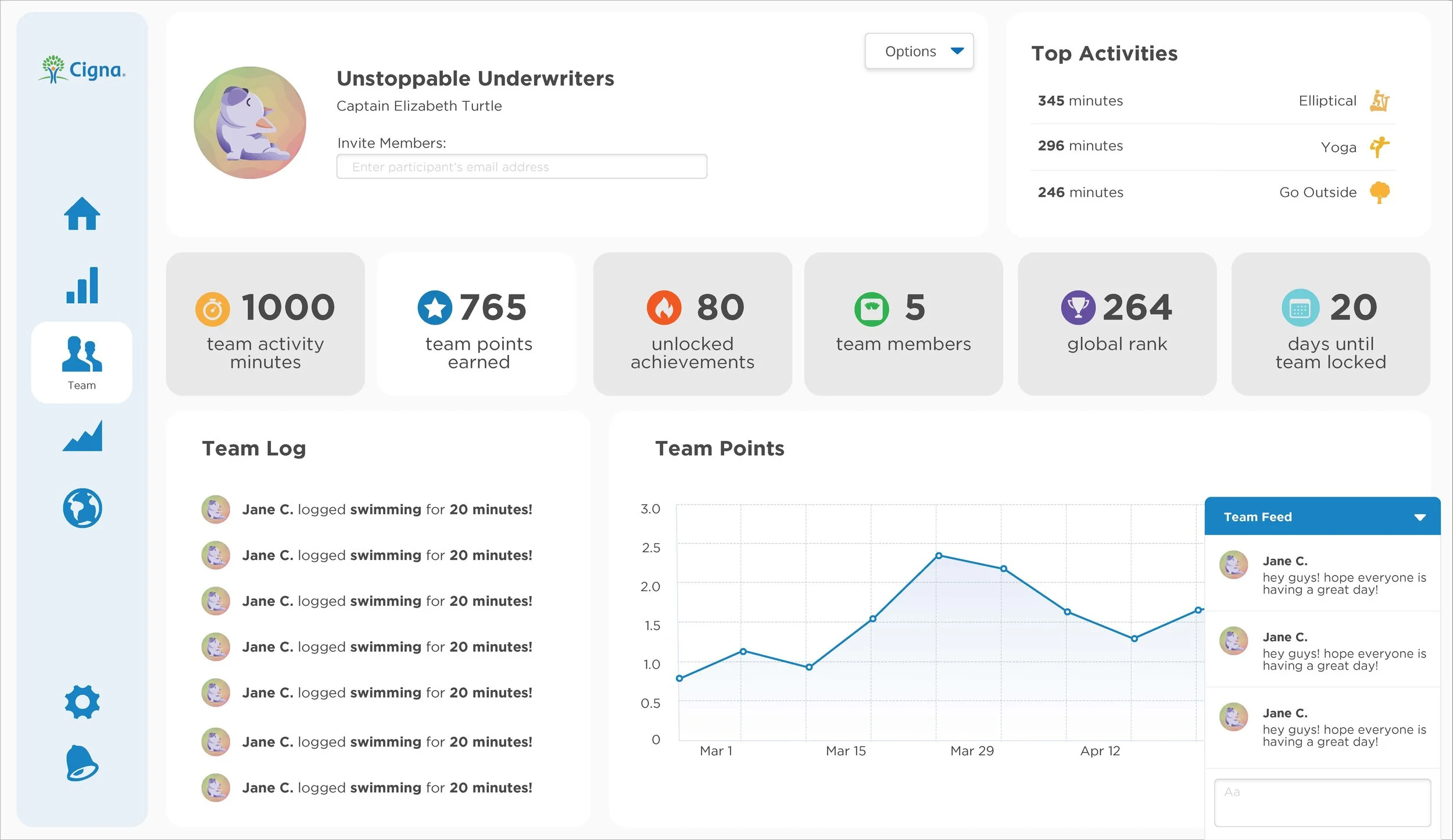
Personalization & Orientation — The platform lacked a clear home base. We introduced a dashboard landing page to give users immediate context on their progress and next steps.
Visual Clarity — The existing interface was dense and visually heavy. We lightened the palette, leaned into iconography, and used custom widgets to present information more efficiently without sacrificing utility.
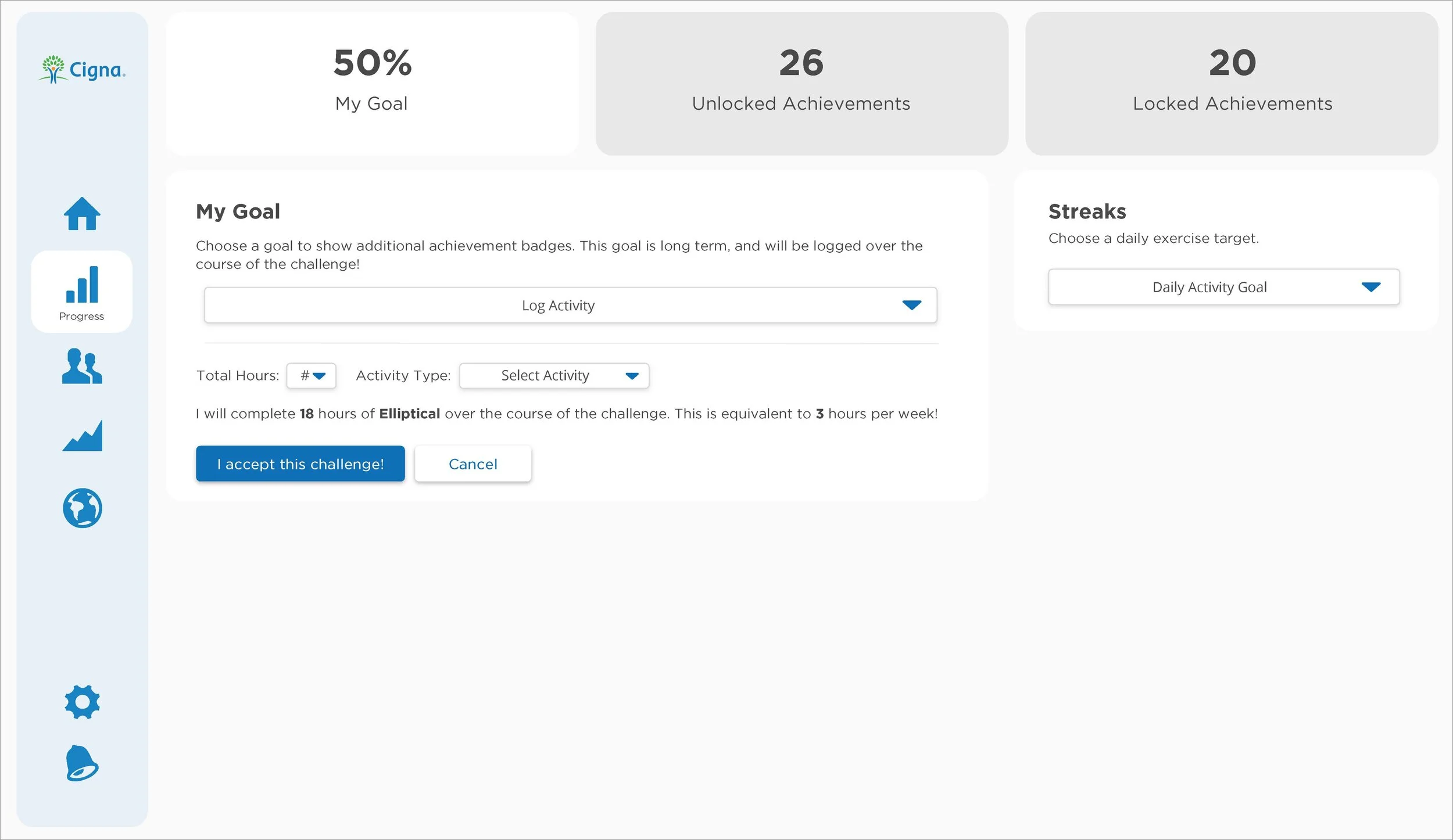
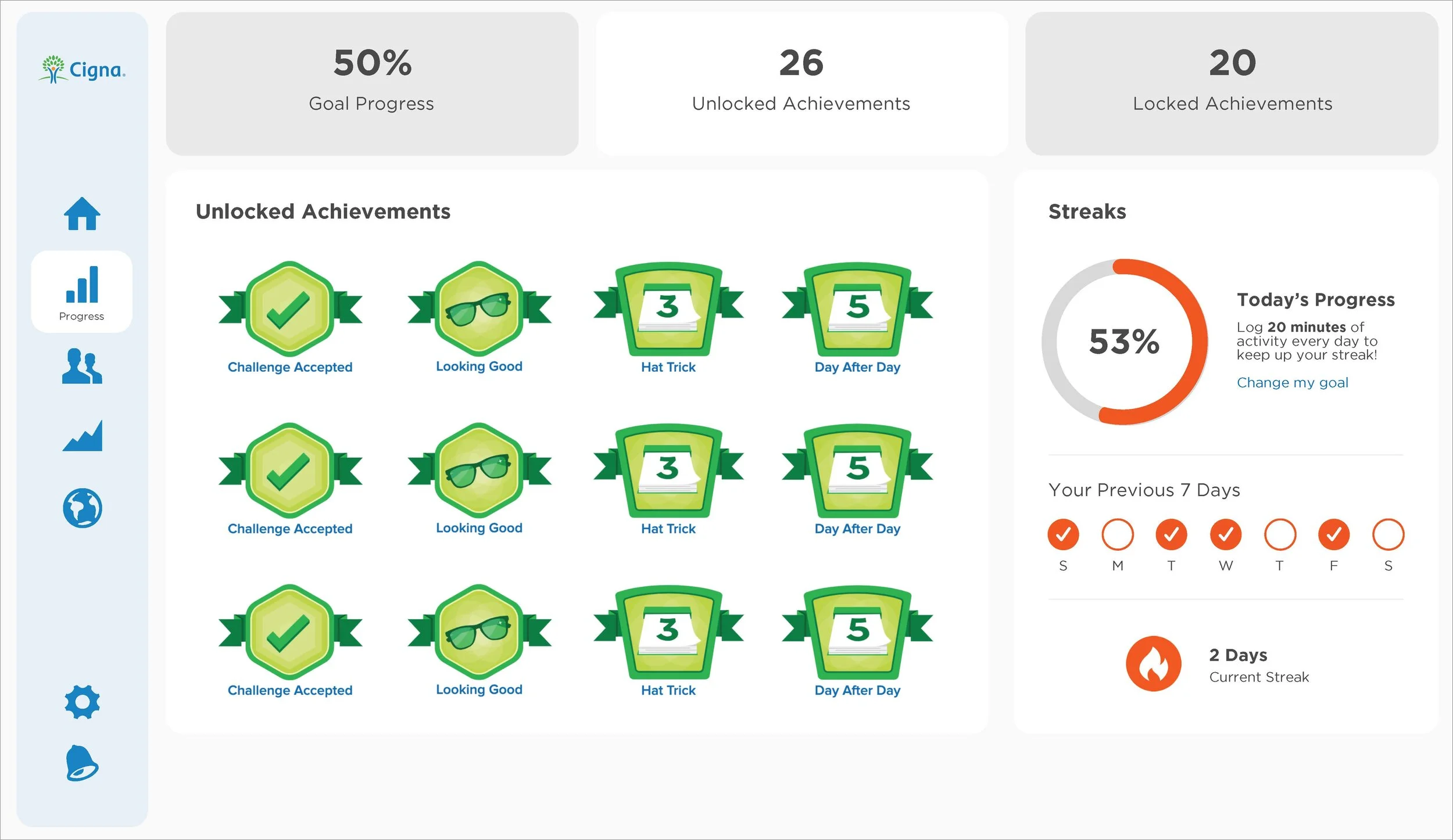
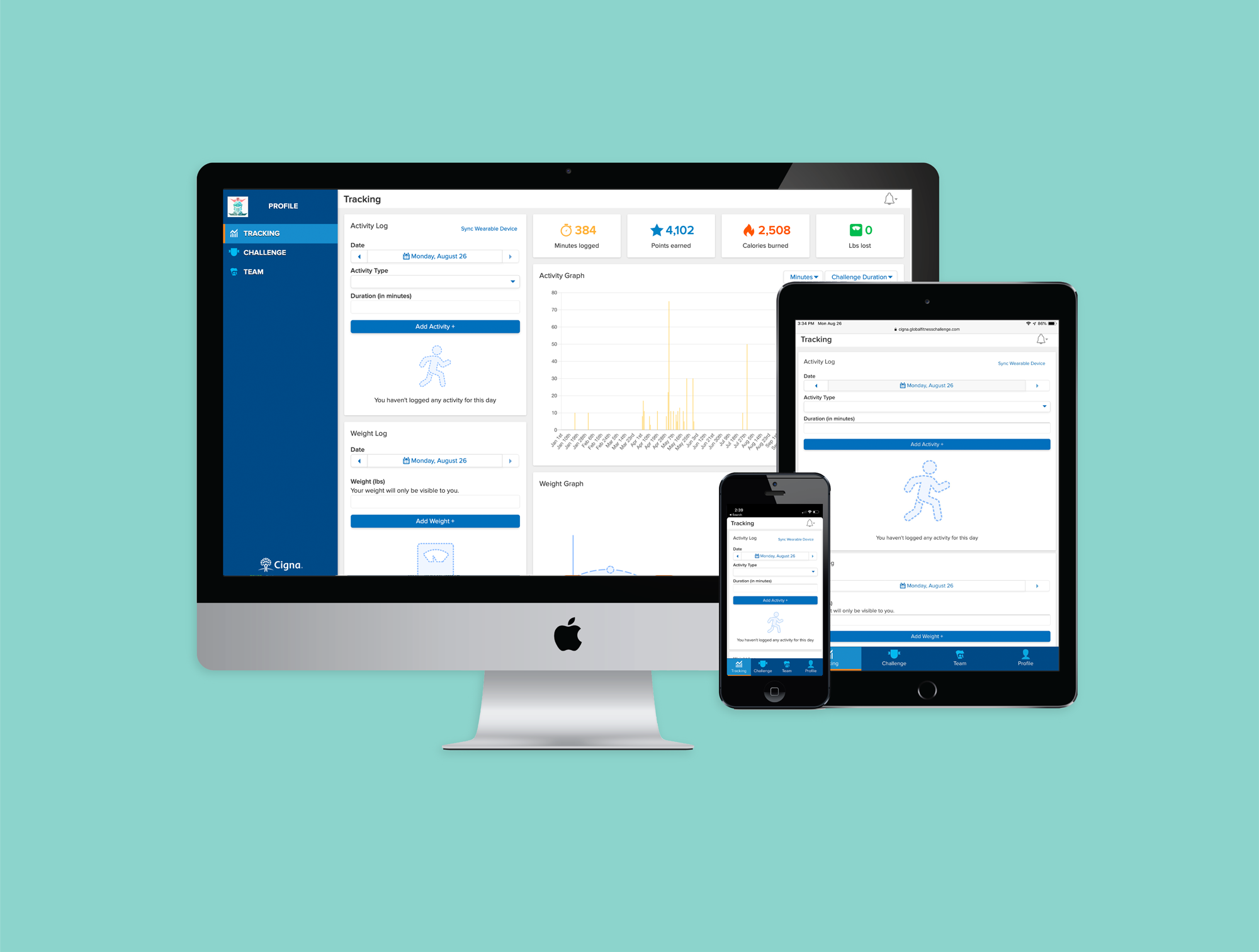
Engagement Mechanics — We added daily streaks and more prominent activity logging to reinforce habit-forming behavior — a core goal of any wellness challenge.
Inclusivity in Data — Metrics like "Top Team Activities" broadened the definition of participation beyond pure performance, making the platform more welcoming to a wider range of users.
Incentive Separation — Data tied to incentive-based challenges was moved to its own dedicated page, reducing cognitive load for users not participating in those programs.
To bridge the gap between design and business stakeholders, I built an interactive InVision prototype that demonstrated site interactions in context. Showing how the product behaves — not just how it looks — consistently led to sharper, more productive conversations with non-design audiences.
The Constraints that Shaped the Work
This redesign ran concurrently with a full platform rewrite — which created both an opportunity and a pressure. It was the right moment to update the front-end, but the business team was simultaneously focused on executing the next GWC launch. Design feedback cycles were compressed, and some refinements were deferred.
This is a common reality in product design: you don't always get to finish. The work I delivered before my departure in 2021 represented the latest visual direction, vetted and positively received — a strong foundation for the team to build on.
Results & Reflection
The platform scaled from 128 challenges in 2020 to a projected 1,000+ in 2021 — a trajectory the self-service model was specifically designed to support. The visual redesign received strong initial stakeholder feedback, with further iteration planned post-launch.
Looking back, what I'm most proud of here isn't any single design decision — it's the range of work this project required. Discovery facilitation, systems thinking across an admin and user portal, translating ambiguous brainstorm output into structured wireframes, and communicating interactive design to non-design stakeholders. This was a product that had to work for HR administrators, individual employees, and a global client base simultaneously.